Introduction
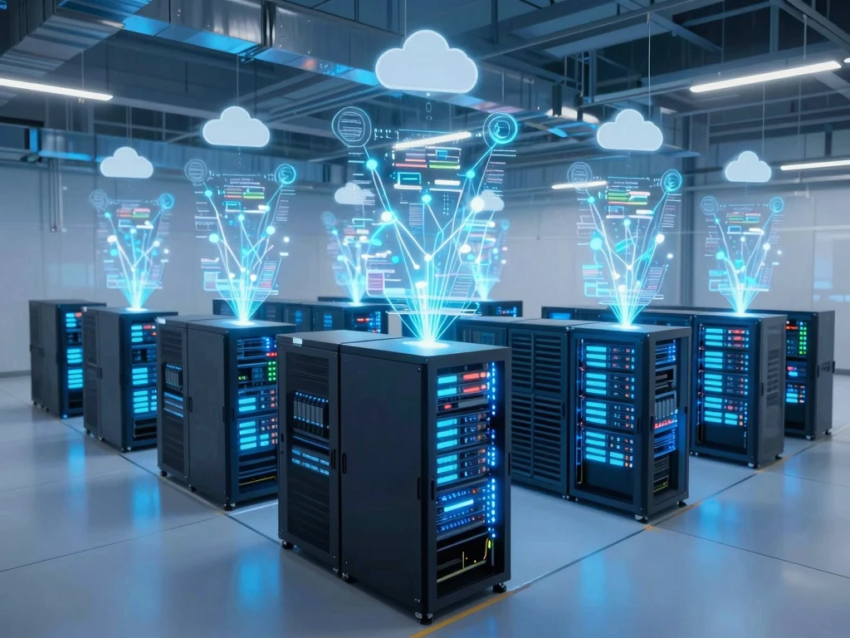
The future of database technology is being shaped by artificial intelligence, cloud computing, automation, real-time analytics, distributed systems, and the growing amount of digital information generated every day.
Databases have always been an essential part of computing. They store the information behind websites, mobile applications, e-commerce platforms, financial services, enterprise software, and countless digital products. However, modern applications are creating new demands that traditional database architectures cannot always handle efficiently.
Businesses now need systems capable of processing enormous amounts of structured and unstructured data while providing fast performance, strong security, flexible scalability, and reliable availability.
At the same time, artificial intelligence is creating entirely new database requirements. AI applications need to work with documents, embeddings, conversation history, user information, knowledge bases, and real-time data.
As a result, database technology is evolving from traditional storage systems into intelligent and highly automated data infrastructure.
This guide explores the future of database technology, including AI-powered databases, cloud databases, vector databases, automation, distributed systems, security, edge computing, and other next-generation developments.
What Is Database Technology?
Database technology refers to the software, infrastructure, architectures, and methods used to store, organize, access, process, and protect information.
Traditional databases commonly organize information into structured tables. Modern systems can also store:
- Documents
- Images and metadata
- Sensor information
- Graph relationships
- Time-series records
- AI embeddings
- Application events
Different database technologies are designed for different workloads.
The future will likely involve multiple database models working together rather than one system handling every type of information.
How Database Technology Is Changing
Database systems are moving toward several major characteristics:
- Cloud-based infrastructure
- Automated administration
- AI-assisted management
- Distributed architectures
- Real-time processing
- Specialized data models
- Stronger security
- Flexible scalability
These changes are being driven by increasing data volumes and increasingly complex applications.
1. Artificial Intelligence and Database Technology
Artificial intelligence is one of the biggest forces influencing the future of databases.
AI can assist with database operations by analyzing workloads and identifying patterns.
Potential applications include:
- Query optimization
- Performance monitoring
- Anomaly detection
- Capacity planning
- Automated recommendations
- Data classification
- Security monitoring
Instead of manually examining every performance metric, database teams can use intelligent tools to identify unusual behavior.
AI may also help developers write and optimize database queries.
However, automated recommendations still require appropriate testing and human oversight before being applied to critical production systems.
2. AI-Powered Database Management
Traditional database administration can involve repetitive tasks.
Database professionals may need to monitor:
- CPU usage
- Memory
- Storage
- Query performance
- Connections
- Replication
- Errors
AI-powered database management can potentially automate parts of this process.
An intelligent database system could identify a slow query, determine the likely cause, and suggest an optimization.
Over time, AI-assisted database management may reduce routine administrative workloads while allowing database professionals to focus on architecture, security, and complex problems.
3. Vector Databases and AI
The growth of generative AI has created demand for vector databases.
Vector databases store numerical representations of data known as embeddings.
These embeddings can represent:
- Text
- Images
- Audio
- Documents
- Other forms of information
Applications can compare vectors to identify semantically similar information.
This is useful for:
- Semantic search
- AI assistants
- Recommendation systems
- Document retrieval
- Knowledge systems
- Retrieval-augmented generation
As AI applications continue to grow, vector search is expected to remain an important component of modern data infrastructure.
4. Cloud Databases
Cloud computing has already changed how businesses deploy database systems.
Instead of purchasing and maintaining all physical infrastructure, organizations can use managed cloud database services.
Cloud databases can provide:
- Flexible scaling
- Automated backups
- Monitoring
- Replication
- High availability
- Managed maintenance
Cloud database platforms can also allow development teams to create infrastructure more quickly.
The future of database technology is likely to include even greater integration between databases and cloud-native application architectures.
5. Serverless Database Systems
Serverless architecture aims to reduce infrastructure management.
In suitable environments, serverless database services can automatically adjust resources according to workload.
Potential benefits include:
- Automatic scaling
- Reduced administration
- Flexible capacity
- Faster deployment
Serverless databases can be particularly useful for applications with unpredictable traffic.
However, developers should evaluate pricing, latency, platform limitations, and vendor dependencies before selecting a serverless database architecture.
6. Database Automation
Automation will play an increasingly important role in database management.
Organizations can automate:
- Backups
- Monitoring
- Scaling
- Database migrations
- Testing
- Maintenance
- Alerts
Automation can reduce repetitive work and improve consistency.
For example, a database backup process can run automatically according to a defined schedule instead of requiring manual intervention.
Automation is especially valuable when database environments become large and complex.
7. Distributed Databases
Modern applications increasingly need to serve users across different geographic regions.
Distributed databases store data across multiple servers or locations.
They can provide:
- High availability
- Geographic distribution
- Scalability
- Fault tolerance
- Reduced latency in some architectures
Distributed systems can be particularly useful for global applications.
However, distributed database design can be complex because developers need to consider consistency, replication, networking, and failure recovery.
8. Distributed SQL
Distributed SQL databases combine relational database capabilities with distributed architectures.
These systems aim to provide familiar SQL-based data management while distributing workloads across multiple machines or locations.
Potential advantages include:
- Relational data models
- SQL support
- Scalability
- Strong consistency options
- High availability
Distributed SQL is becoming increasingly relevant to cloud-native applications that require relational database functionality at larger scales.
9. Real-Time Databases
Businesses increasingly need access to information as soon as it is generated.
Real-time database technologies can support applications such as:
- Financial monitoring
- Fraud detection
- Online gaming
- IoT systems
- Logistics
- Customer analytics
- Application monitoring
Real-time data systems can help organizations respond quickly to events.
As digital services become more interactive, low-latency data processing will remain an important database requirement.
10. Edge Databases
Edge computing moves computing and data processing closer to users and devices.
Edge databases can be useful when applications need to operate with low latency or unreliable network connections.
Potential applications include:
- Connected vehicles
- Industrial IoT
- Smart cities
- Remote monitoring
- Retail systems
- Autonomous technologies
Edge database systems may need to synchronize with centralized databases when network connectivity becomes available.
This creates new challenges involving consistency, security, and synchronization.
11. Database Technology for IoT
The Internet of Things is producing enormous amounts of information.
Connected devices can generate continuous streams of:
- Temperature measurements
- Location data
- Machine information
- Energy usage
- Motion data
- Environmental readings
Time-series and distributed database technologies can help manage this information.
Edge computing can also reduce the amount of raw information that needs to be transferred to centralized cloud systems.
12. Multi-Model Databases
A growing database trend is the ability to work with multiple data models within a single platform.
A multi-model system may support combinations of:
- Relational data
- Documents
- Graphs
- Key-value data
This approach can reduce the need to operate completely separate systems for every type of information.
However, specialized databases may still provide advantages for highly specific workloads.
13. Real-Time Analytics
Organizations increasingly want analytics systems that can process information while events are happening.
Real-time analytics can help businesses understand:
- Customer activity
- Sales
- Website traffic
- Security events
- Machine performance
- Financial activity
Combining databases with streaming systems can allow businesses to react more quickly to changing information.
14. Natural-Language Database Queries
AI may also change how people interact with databases.
Traditionally, users need to understand query languages such as SQL.
AI systems can potentially allow users to describe questions using natural language.
For example:
“Which products generated the most revenue this month?”
An AI system could interpret the request, create an appropriate database query, and return the result.
This could make data analysis accessible to more employees.
However, natural-language database interfaces require strong security controls to prevent unauthorized data access or incorrect queries.
15. AI Agents and Database Systems
AI agents may become another major database workload.
An AI agent can need persistent information about:
- Tasks
- Users
- Conversations
- Documents
- Preferences
- Business workflows
Databases can provide persistent storage for this information.
An AI agent might retrieve information from a database, perform an approved action, and store the result.
As agentic systems become more capable, developers will need to carefully control database permissions and actions.
16. Stronger Database Security
Security will become even more important as databases become more connected.
Modern database security can include:
- Authentication
- Authorization
- Encryption
- Auditing
- Monitoring
- Network controls
- Least-privilege access
Organizations should assume that database access needs to be carefully controlled.
AI and automation should not be given unrestricted access to sensitive information.
17. Zero Trust Database Security
Zero Trust principles can be applied to database environments.
Instead of automatically trusting users or applications inside a network, access can be continuously evaluated.
Security strategies can include:
- Identity verification
- Least privilege
- Network segmentation
- Access monitoring
- Strong authentication
This approach can help reduce the impact of compromised accounts or applications.
18. Data Privacy
The future of database technology will also involve stronger attention to privacy.
Organizations increasingly store sensitive information such as:
- Customer records
- Financial information
- Personal details
- Business documents
Data privacy strategies may include:
- Encryption
- Data masking
- Tokenization
- Access controls
- Retention policies
- Auditing
Organizations should understand the privacy requirements that apply to their industry and jurisdictions.
19. Database Observability
As database environments become more complex, observability will become increasingly important.
Database observability can help teams understand:
- Why queries are slow
- Which resources are overloaded
- When errors occur
- How workloads change
- Where performance bottlenecks exist
Advanced monitoring tools can provide visibility across databases, applications, networks, and cloud infrastructure.
20. Autonomous Database Operations
Database systems may become increasingly capable of managing themselves.
Potential autonomous capabilities include:
- Automatic performance optimization
- Resource scaling
- Backup management
- Error detection
- Security monitoring
- Workload balancing
The goal is not necessarily to remove database professionals but to reduce repetitive operational tasks.
Human experts will remain important for architecture, governance, risk management, and complex decisions.
21. Database-as-a-Service
Database-as-a-Service, or DBaaS, is likely to remain an important part of cloud computing.
DBaaS allows businesses to use managed databases without handling every infrastructure task themselves.
Providers may manage:
- Hardware
- Software updates
- Backups
- Scaling
- Monitoring
- Availability
This can be particularly useful for small teams that want to focus on application development.
22. Database Cost Optimization
As cloud database adoption increases, controlling costs will become increasingly important.
Organizations may need to monitor:
- Storage usage
- Compute resources
- Data transfer
- Query workloads
- Backup costs
- Idle resources
AI-based optimization tools may help identify unused resources and inefficient workloads.
Cost management will become an important part of database architecture.
23. Open-Source Database Innovation
Open-source databases will continue contributing to database innovation.
Open-source technologies can provide:
- Flexibility
- Customization
- Community development
- Deployment options
- Reduced dependence on proprietary systems
However, organizations should evaluate maintenance, security updates, support, and operational expertise before adopting an open-source database.
24. Database Technology and Big Data
The amount of data generated worldwide continues to grow.
Organizations may need to process information from:
- Websites
- Mobile apps
- IoT devices
- Business systems
- Social platforms
- AI applications
Modern database infrastructure may increasingly integrate with data warehouses, data lakes, streaming systems, and analytics platforms.
The goal is to turn large datasets into useful information.
25. Database Technology and Blockchain
Blockchain systems represent another type of data infrastructure.
Traditional databases generally provide centralized or controlled data management, while blockchain networks can distribute records among network participants.
Blockchain may be useful for specific applications involving:
- Digital assets
- Shared records
- Tokenization
- Decentralized applications
However, blockchain is not a replacement for every traditional database.
Businesses should choose the technology based on actual requirements.
Benefits of Next-Generation Database Technology
Future database technologies can provide several potential benefits.
Greater Scalability
Distributed and cloud architectures can support growing workloads.
Faster Data Access
Real-time processing and optimized infrastructure can reduce latency.
Better Automation
AI can reduce repetitive database administration.
Improved AI Support
Vector databases and intelligent data systems can support modern AI applications.
Stronger Security
Modern access controls and monitoring can help protect sensitive information.
Flexible Infrastructure
Cloud and serverless architectures can adapt to changing workloads.
Challenges of Future Database Systems
Despite these developments, several challenges remain.
Complexity
Combining multiple database technologies can increase operational complexity.
Security
More automation and integrations can create new attack surfaces.
Cost
Cloud infrastructure can become expensive without careful resource management.
Skills
Organizations need professionals who understand modern data architectures.
Data Governance
Large amounts of information require clear rules for access, quality, retention, and protection.
Vendor Dependence
Managed cloud databases can create dependencies on specific providers.
How Developers Can Prepare for the Future
Developers can prepare by learning:
- SQL
- Database design
- Data modeling
- Cloud databases
- NoSQL concepts
- API integration
- Database security
- Query optimization
- Distributed systems
- Vector databases
Understanding fundamentals is more important than learning every database product.
Developers should also learn how databases fit into broader application architectures.
How Businesses Can Prepare
Businesses can prepare for future database technology by:
- Reviewing existing database infrastructure.
- Identifying performance and scalability problems.
- Improving data governance.
- Strengthening database security.
- Automating repetitive operations.
- Exploring cloud database services.
- Evaluating AI and vector database use cases.
- Testing disaster recovery procedures.
- Monitoring database costs.
- Training technical teams.
A gradual approach can reduce risk while allowing organizations to adopt useful innovations.
The Future of Database Technology
The database industry is moving toward a more intelligent and automated future.
Traditional relational databases will remain important, but they will increasingly operate alongside NoSQL, vector, graph, time-series, distributed, and cloud-native systems.
AI will become more deeply integrated into database management and application development.
Cloud platforms will continue providing flexible infrastructure, while edge computing will support applications that require local processing and low latency.
Database security will also become increasingly important as systems become more interconnected.
The future may not be about replacing existing database technologies. Instead, it will involve connecting different systems and selecting the right technology for each workload.
Conclusion
The future of database technology will be shaped by AI, cloud computing, automation, distributed architectures, real-time processing, vector databases, edge computing, and stronger security.
AI-powered database management can help automate monitoring, optimization, and other repetitive tasks. Vector databases are becoming important for generative AI, semantic search, and intelligent applications.
Cloud-native and serverless databases can provide flexible infrastructure, while distributed and edge architectures can support global and low-latency applications.
At the same time, organizations must address security, privacy, governance, cost, and operational complexity.
For developers, learning database fundamentals, SQL, cloud technologies, security, distributed systems, and AI data infrastructure can provide valuable skills for the evolving technology landscape.
For businesses, the most effective strategy is to adopt database technology according to real requirements rather than simply following trends.
Next-generation database systems will increasingly become intelligent, automated, scalable, and cloud-connected. As digital information continues to grow, advanced database technology will remain a critical foundation for AI applications, business platforms, websites, mobile services, IoT systems, and the wider digital economy.